
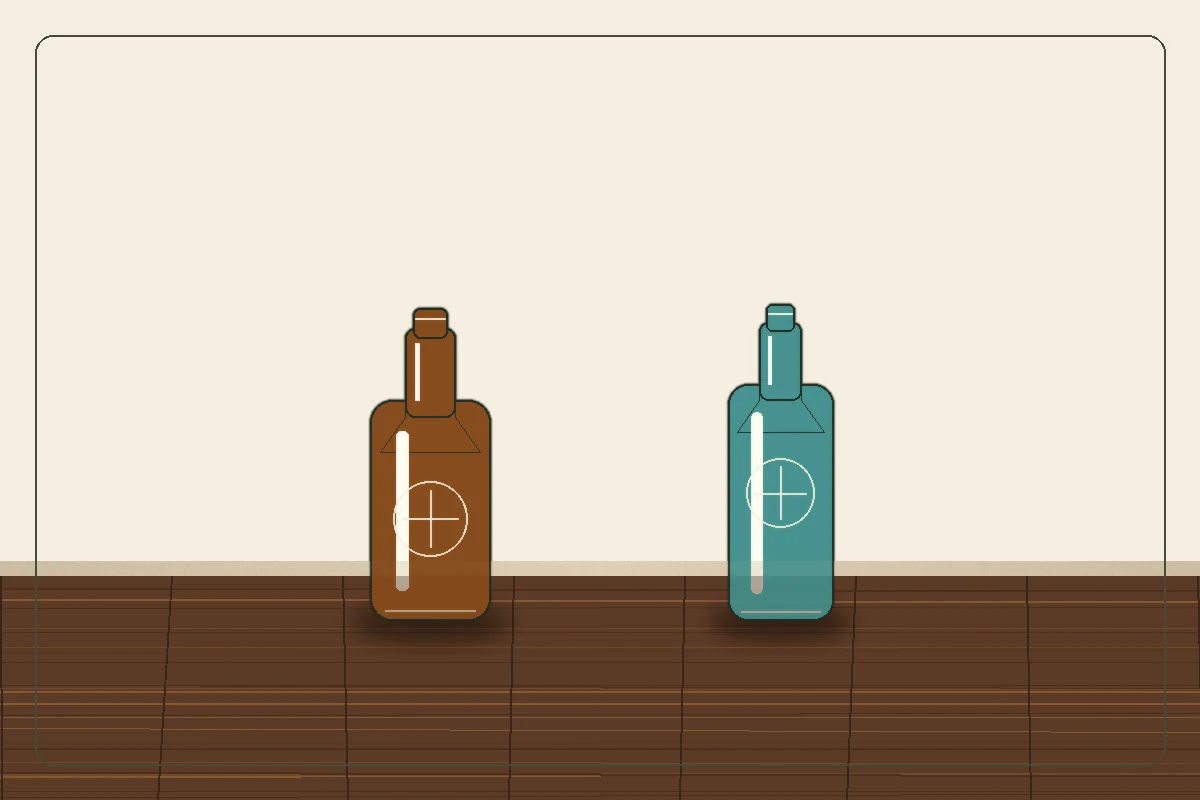
Decode companies, cities, contents, glasshouses, and mold identifiers. Begin by recording the bottle exactly as it appears before trying to assign a date or price.
Identification checklist
- Measure overall height, base dimensions, mouth diameter, and approximate capacity.
- Describe the glass color in daylight against both white and black backgrounds.
- Trace each mold seam from the heel through the shoulder, neck, and finish.
- Photograph the base, including numbers, symbols, scars, and embossing.
- Transcribe wording exactly, preserving punctuation and unusual spelling.
Dating approach
Manufacturing evidence provides a range rather than an automatic exact year. Pontil scars, tooled finishes, automatic seams, suction scars, closure patents, and maker histories overlap. Use several clues together and test the conclusion against the bottle’s intended use.
What affects collector interest
Demand may be influenced by rarity, color, embossing, graphics, local history, unusual form, condition, provenance, and whether a specialized collector community actively seeks the category. A visually striking bottle is not necessarily rare, and a plain bottle can be important when tied to a scarce business or historical context.
Research workflow
- Search exact embossed phrases and place names.
- Compare bottle form and finish with technical references.
- Research the company, bottler, pharmacy, dairy, or glasshouse.
- Review completed sales for the same variant and condition.
- Consult a category specialist before assuming exceptional rarity.